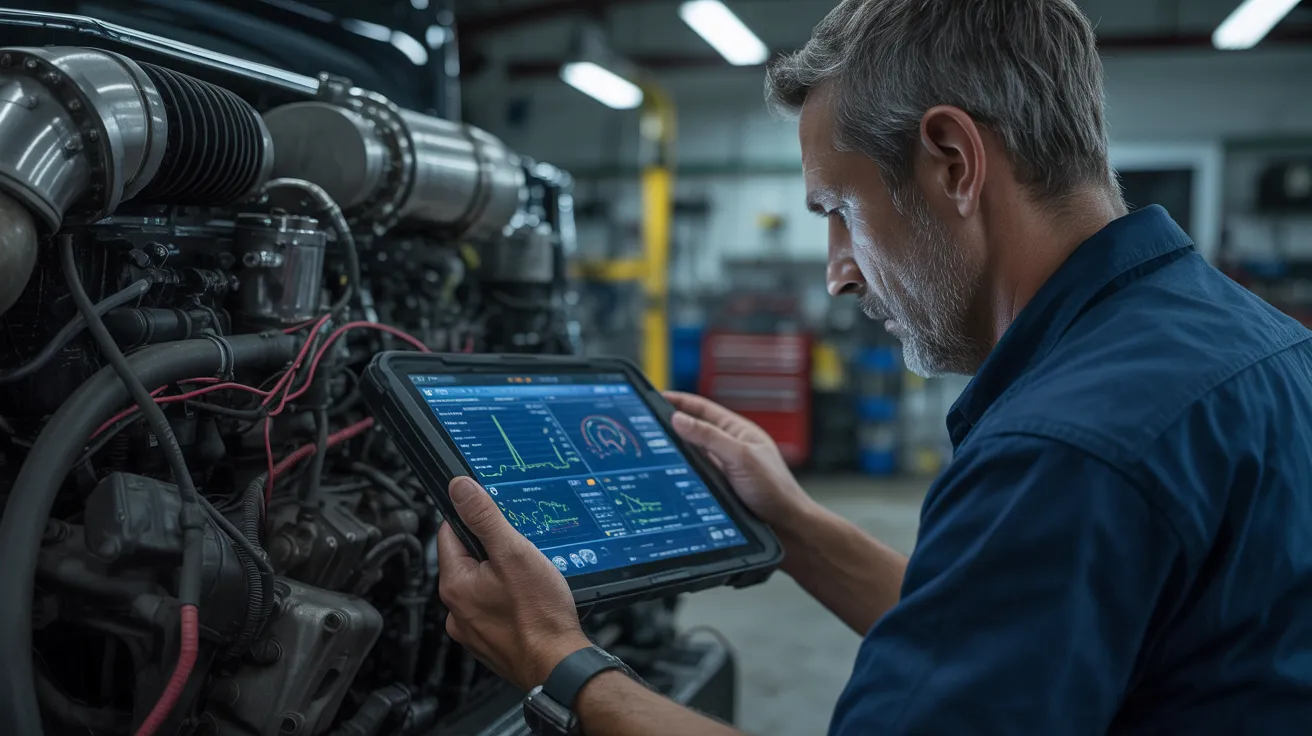
Wichita fleet maintenance specialists perform analyses using manufacturer-grade scan tools, live data, diagnostic testing, and precision checks to confirm root cause before systems are changed. You can obtain power unit, aftertreatment, turbo, fuel, brake, suspension, transmission, and electronic repairs, plus preventive maintenance that identifies wear early. Prompt service reduces further damage, downtime, and future failures. In the sections below, you'll discover details on problems, tests, timing, and cost factors most important to your business.
Key Takeaways
- Expert Wichita diesel truck technicians utilize OEM-level diagnostics, trouble-code verification, and live data analysis to determine root causes.
- Provided services include engine, aftertreatment, turbo, fuel system, transmission, brake, suspension, electrical, and cooling system repair.
- Frequent issues include are poor starts, insufficient power, overheating, DPF or SCR faults, fuel contamination, battery failures, and turbocharger failures.
- Before changing systems, a dependable diagnostic process combines scan tools, pressure testing, thermal imaging, and mechanical inspection.
- Downtime is decreased, repair costs are controlled, compliance is promoted, and fleet reliability is improved through early maintenance and diagnostics.
What's Covered in Wichita Diesel Truck Repair Services?
Wichita diesel truck repair provides, at minimum, electronic diagnostics, engine and aftertreatment service, air and fuel system repair, clutch plus transmission work, brake as well as suspension service, electrical troubleshooting, cooling system repair, find here and preventive maintenance. You must have mechanics who validate fault codes, review data streams, and validate repairs through properly calibrated diagnostic equipment. They service turbochargers, injectors, DPF and SCR elements, driveline assemblies, wheel ends, parts for steering, batteries, alternators, and HVAC controls. They also execute analysis of fluids, filter replacement, alignment checks, DOT inspections, and fleet-level testing to hold your trucks compliant and available. When your operation demands emissions testing, the shop should document findings, gauge aftertreatment efficiency, and make certain software updates align with OEM specifications. You enjoy a well-defined process that cuts downtime, manages maintenance costs, and delivers reliable day-to-day truck performance.
Wichita Diesel Truck Issues Often Found
Once you know what Wichita diesel truck repair covers, the subsequent phase is identifying the issues shops observe most commonly in local fleets, and you'll often face hard starts, low power, overheating, oil leaks, and aftertreatment malfunctions resulting from stop-and-go routes, substantial loads, and Kansas temperature variations.
You should also watch for turbocharger malfunctions associated with poor lubrication, blocked air filters, or exhaust obstruction, and fuel contamination is a further common problem; water, debris, or algae can degrade injectors, wear high-pressure pumps, and reduce combustion effectiveness, while you may see EGR valve binding, DPF soot loading, coolant system leaks, battery and charging troubles, or deteriorated suspension components from challenging jobsite access, and if you tackle these patterns early, you decrease downtime, safeguard high-value engine parts, and keep your trucks functioning reliably.
How Wichita Truck Diagnostics Identify Faults Quickly
Initiate with a methodical testing approach, and you'll identify truck faults far quicker than with random repairs. You validate the issue, review fault data, and confirm system conditions before servicing assemblies. That sequence cuts needless labor and avoids misdiagnosis.
Next, you use OBD diagnostics to record stored and active codes, observe active data, and match sensor data against factory parameters. You test fuel pressure, boost output, injector flow, and aftertreatment data in real time. If heat-related issues are expected, thermal imaging reveals unusual temperature differences across turbos, intercooler piping, bearings, brakes, wiring, and DPF assemblies. You then validate findings with circuit checks, pressure tests, and mechanical examination. By pinpointing the root cause methodically, you fix the real failure instead of pursuing symptoms or installing good parts.
When to Schedule Wichita Diesel Repair
You should schedule Wichita diesel repair as soon as warning indicators manifest, including difficult starts, abnormal exhaust, fluid leaks, or fault codes. A immediate inspection is required to stop secondary damage if your truck's power, fuel economy, shift quality, or engine temperature starts decreasing. Scheduled maintenance at specified preventive intervals reduces failures and keeps diagnostics, repairs, and uptime on schedule, so you should also book service regularly.
Warning Signs Present Themselves
Set up Wichita diesel repair when alert signs appear, before a slight fault develops into injector breakdown, turbo malfunction, or an emissions-system failure.
Measurable faults often explain these signals: insufficient rail pressure, air intrusion, sensor drift, charge-air leaks, faulty glow plugs, coolant seepage, or DPF regeneration problems. If ticking, hissing, or belt chirp is observed, record when it appears, engine temperature, and load. Then set up diagnostics quickly. Verify live data, read fault codes, inspect connectors, pressure-test systems, and a technician can locate root cause before further damage propagates. Protects uptime, stabilizes repair scope, and lowers the probability of roadside stoppages or pricey component replacement later through early intervention.
Performance Begins Declining Off
Reduced performance shows up before a hard fault code usually does, which makes declining power, slower acceleration response, poor gas mileage, frequent downshifts, or weak tow capacity definite indicators to schedule Wichita diesel repair. You mustn't presume these changes are standard load variation or weather impacts. Technicians are able to check boost production, injector balance, rail pressure, airflow measurements, exhaust obstruction, and transmission-related load reaction before drivability deteriorates further.
Should your truck hesitate under acceleration, labor on grades, or burn more fuel on the same drive, quantifiable inefficiency is already happening. Reduced fuel filtration can decrease pressure and atomization, while poor turbo service can reduce boost and elevate exhaust heat. A precise diagnostic process will identify whether the problem begins in air, fuel, exhaust, or control parameters, letting you to address the cause before performance drops further.
Preventive Service Intervals
Scheduled service intervals enable you the best option to schedule Wichita diesel repair before degradation results in failures, since diesel failures rarely begin when a warning light activates. Engine hours, mileage, duty cycle, idle time, and load history should establish intervals, not speculation. Through consistent service, you can spot injector faults, belt damage, turbo shaft play, and clogged filtration before performance falls.
Periodic testing is required, not just part replacement. Regular coolant analysis checks additive levels, contamination, freeze protection, and early liner cavitation risk. Through routine fluid sampling, you can find fuel dilution, soot loading, and bearing metal before they worsen. When you manage multiple units, fleet inspections align checks across trucks, decrease missed defects, and ensure repairs planned instead of reactive. Productivity, budgets, and component life are protected by that approach.
Preventive Maintenance and Outage Reduction
By maintaining regular service intervals based on engine hours, mileage, and service conditions, you minimize downtime. Through regular inspections and diagnostics, you detect degradation, fluid contamination, and sensor faults before they become road failures. With a preventive maintenance plan, you keep repair timing controlled, minimize unexpected outages, and protect fleet productivity.
Planned Maintenance Intervals
By consistently following scheduled service intervals, you minimize unplanned downtime through identification of wear patterns, fluid degradation, and small component faults before they develop into road calls or significant repairs. You maintain your truck running within manufacturer specifications when you replace fuel filters on schedule, execute each coolant flush at the specified mileage, and record every service event. Supporting combustion efficiency, lubrication effectiveness, thermal control, and driveline reliability under load depends on consistent interval-based maintenance.
You also manage operating costs by standardizing inspections, parts replacement, and fluid service around known duty cycles. Scheduling shop visits, allocating labor, and ordering components before mileage thresholds pass happens with that structure. Instead of responding to avoidable failures, you sustain service continuity through disciplined timing. Wichita fleets achieve uptime, cleaner diagnostics, and more reliable repair scheduling year-round with that approach.
Early Fault Detection
Detecting faults early during planned maintenance shortens repair durations and avoids minor deviations from turning into roadside failures. Before intensification, you identify abnormal fuel trim, boost loss, fluid contamination, and charging irregularities. Sensor calibration is checked to guarantee false readings don't obscure developing injector, EGR, or aftertreatment problems.
Inspection procedures entail evaluating scan data, pressure readings, and temperature trends against baseline values. Assessing cold start behavior, cranking speed, exhaust color, and idle stability helps spot compression loss, weak batteries, or glow plug faults. Wear that can cause secondary damage is detected through examining belts, hoses, clamps, and harness routing. You lower unscheduled downtime, protect expensive components, and keep your truck available for revenue miles instead of emergency shop visits by resolving small discrepancies early, resulting in fewer service interruptions overall.
Diesel Engine, Electrical, and Brake Repair Services
Maintain your diesel truck's secure and efficient operation with targeted brake, engine, and electrical repairs that resolve root causes rather than symptoms. Brake inspections that verify pad wear, rotor state, caliper function, air or hydraulic pressure reliability, and ABS sensor reliability are required before stopping performance declines.
Arrange turbocharger maintenance, fuel system testing, glow plug replacement, and coolant flushing at regular intervals to achieve engine performance. These services serve to prevent hard starts, overheating, boost loss, injector imbalance, and combustion inefficiency. Your electrical repairs should encompass battery load testing, alternator output verification, starter draw analysis, wiring continuity checks, and module communication diagnostics. You restore reliable cranking, charging, lighting, and fault-code reporting while avoiding repeat failures and minimizing unscheduled downtime by repairing voltage drops, corroded grounds, damaged harnesses, and sensor faults.
Understanding What Drives Wichita Diesel Repair Pricing
Repair budgeting also means knowing what influences diesel repair costs in Wichita. Your ultimate invoice is based on failure type, inspection time, part complexity, and unit configuration. Electronic malfunctions often demand scan-tool testing, wiring tracing, and software testing before any hardware are replaced.
Costs also fluctuate with hardware quality, labor pricing, and component reach. If your engine bay is congested, technicians spend more time removing covers, lines, or adjacent assemblies. Aftertreatment, turbocharger, injector, transmission, and electrical repairs typically carry different time standards and calibration requirements. Severe damage can add machining, fluid refill, filters, seals, and post-repair road verification. If you delay service, a minor leak or sensor malfunction can develop into collateral damage. Fleet trucks with high mileage may also require multiple related repairs during one service, increasing total expense and downtime.
How to Find Wichita Diesel Repair Technicians
You should pick a Wichita diesel repair shop by verifying its scan tool technology, technician qualifications, and vehicle support before you arrange service. Check if the shop employs OEM-level scan tools, diagnostic testing equipment, and software for your engine, aftertreatment, and transmission systems. Confirm that technicians can interpret fault data, conduct root-cause analysis, and document repairs accurately.
Examine service capabilities, parts sourcing, and knowledge with your truck class. A qualified provider manages emissions systems, fuel delivery, turbochargers, cooling components, and driveline issues without guesswork. Validate whether it supports fleet managers with maintenance records and offers owner operators with practical repair recommendations. Finally, evaluate warranty terms, inspection procedures, and communication standards. If a shop presents findings thoroughly and prioritizes quantifiable diagnostics, you're choosing real diesel expertise.
Why Swift Diesel Repair Is Important in Wichita
Because downtime interrupts itineraries, drop-off times, and earnings, fast diesel repair is essential in Wichita for both fleet managers and owner operators. Your truck sitting means lost productivity, lost pickup opportunities, and chain-reaction schedule failures you must experience. Rapid diagnostics identify faults in injection systems, aftertreatment systems, turbochargers, sensors, and wiring circuits before small defects develop into major breakdowns.
You need technicians who check codes, examine components, and finish repairs properly the first time. Fuel efficiency is preserved, unscheduled stops are reduced, and secondary damage to emission systems and cooling systems is reduced by that approach. Highway miles, weather shifts, and stop-and-go traffic speed up wear in Wichita, so turnaround time directly determines uptime. Roadside assistance access also is critical when failures take place offsite. Your trucks stay within compliance, consistent, and profitable with faster repair cycles that preserve customer commitments and dispatch accuracy daily.
Frequently Asked Questions
Do You Have Available Mobile Diesel Truck Service in Wichita?
Yes, you can access mobile diesel truck repair in Wichita. You obtain field diagnostics, roadside support, battery diagnostics, forced regens, electrical troubleshooting, and minor mechanical repairs at your location. You minimize downtime because technicians identify faults with scan tools, multimeters, and pressure testing equipment. If your truck can't move safely, you'll get a comprehensive assessment and next-step advice for towing, shop repair, or immediate field service, depending on failure severity.
Do You Supply After-Hours or Emergency Diesel Maintenance?
Yes, you have the ability to after-hours and emergency diesel repairs when breakdowns arise outside standard shop hours. You get emergency response for no-start conditions, coolant loss, air system faults, and electrical failures. Technicians perform a systematic diagnostic process to detect the fault and perform nighttime service when conditions allow safe field repair. If onsite correction is not practical, next-step direction, towing coordination, and priority scheduling are supplied to minimize downtime and restore operation swiftly.
Are You Servicing Fleet Accounts and Upkeep Agreements?
Yes—you can place service on automatic scheduling with commercial fleet maintenance and custom contract management. You access routine inspections, preventive service intervals, maintenance tracking, and complete reporting that keeps your units compliant and productive. We create maintenance contracts based on your operating hours, vehicle mix, and service priorities, so you decrease downtime and manage costs. You can also set approval thresholds, billing terms, and contact protocols for a exact, responsible service process.
Do You Repair All Diesel Truck Brands and Models?
Yes, you can obtain repair work for practically all diesel truck makes and models. You gain extensive manufacturer compatibility, so technicians can troubleshoot, maintain, and repair lightweight, medium,, and heavy-duty diesel platforms with precision. They follow OEM procedures, use manufacturer-specific diagnostic equipment, and verify parts and labor meet warranty validation requirements. You can count on exact troubleshooting, compliant repairs, and consistent service standards across diverse engines, drivetrains, and emissions systems.
What Payment Options Can You Utilize at Wichita Diesel Repair Shops?
Wichita diesel repair facilities generally take credit cards, debit cards, cash, business checks, and fleet account billing as payment. Many shops also offer contactless payment options like mobile wallets, tap-to-pay, or emailed invoices with digital payment portals. You should verify accepted payment methods before service, particularly for major repairs, after-hours pickup, or business accounts. Fleet operators should ask whether the shop provides net terms, purchase orders, or financing options.
Concluding Thoughts
It's tempting to believe overlooking a diesel warning light would save time—until your truck shows otherwise on a Wichita route. By booking diagnostics early, maintaining preventive maintenance, and relying on certified repair specialists, you minimize failures, contain costs, and protect uptime. Engine, brake, and electrical problems rarely fix themselves, despite their notable talent for showing up at the worst moment. When it comes to diesel repair, delay is the fastest way to forfeit productivity. Taking action early means your equipment continues working.